Saving a village shop: how a village brings its shop back
When the last shop closes, a village loses more than a place to buy groceries. This guide shows how Swiss villages keep their shop going themselves: from the first survey and the cooperative to a shop that is open around the clock.
Contents: Why · Eight steps · Organisation · Operation · Financing · Canton · Examples · Questions
In short
- First find out whether the village wants the shop and will back it, ideally with a survey of every household.
- A cooperative spreads capital and responsibility across many shoulders. It takes at least seven people to found one.
- Without staff at the till, the biggest running cost disappears. Many village shops are now staffed for only a few hours a week.
- The money usually comes from several sources: shares, donations, the municipality, Swiss Mountain Aid, foundations and a lot of volunteer work.
- Opening hours, alcohol sales and food control are set by the canton. Ask there early.
Why village shops close
Usually it no longer pays: rent, refrigeration and staff are expensive relative to the number of customers, and a new shopping centre nearby or online retail draws sales away. Often there is no successor when long-standing shopkeepers stop. In Gurtnellen the shopkeeper had to give up for health reasons after almost 40 years; in Gähwil the shop closed six months after a change of operator.
Swiss Mountain Aid has received many more requests from village shops since 2019. Since the start of 2023 it has supported 21 village shops with more than CHF 500,000, about a third of them with a digital concept.
Eight steps to your own village shop
1 Assess demand
A questionnaire for every household: who shops where, what is missing, who will help?
2 Form a core group
A few people with time who are known in the village. Often someone from the municipal council takes part.
3 Choose a structure
A cooperative, an association or an operator working together with the village.
4 Set the operating model
Staffed, partly staffed or open around the clock with no staff at the till.
5 Find premises
Central, with parking and access for deliveries. A moderate rent helps enormously.
6 Secure financing
Combine shares, donations, the municipality, Mountain Aid, foundations and volunteer work.
7 Clarify permits
Discuss opening hours, alcohol and food control with the municipality and canton.
8 Convert and open
Convert with volunteers, sign up suppliers, set up the checkout and invite the village.
Does the village really want the shop?
Before any money flows you need an honest answer: will the village shop there if the shop exists? In Gurtnellen, 304 of 490 residents filled in a six-page questionnaire and 59 households offered to help. The information evening that followed filled the gym.
Do the sums soberly too: Swiss Mountain Aid supports shops with an annual turnover of roughly CHF 400,000 to 1 million; below that, a shop counts as financially very critical. A household spends about CHF 7,500 a year on food on average. How many households would have to spend a good share of that in the village?
Cooperative, association or operator?
Cooperative
The most common form. At least seven people found it with a public deed, and it comes into being when entered in the commercial register. Each member has one vote. At the Gürkli in Gurtnellen a share costs CHF 200.
Association
Quicker to found. Membership fees can help cover running costs such as the rent.
Operator with the village
A company runs the shop and the village backs it. In Gähwil the village association brought on board Toggenburgshop AG, which runs the Dorla.
Staffed, mixed or around the clock?
Wages are the biggest running cost in a village shop. That is why more and more villages opt for self-service: customers scan their own shopping and pay at the terminal.
Staffed
Personal and familiar, but expensive: every opening hour needs staff. It only pays with enough turnover.
Mixed
Staffed for a few hours a week, self-service the rest of the time. The Gürkli in Gurtnellen is staffed on Mondays and Thursdays.
Around the clock, no staff
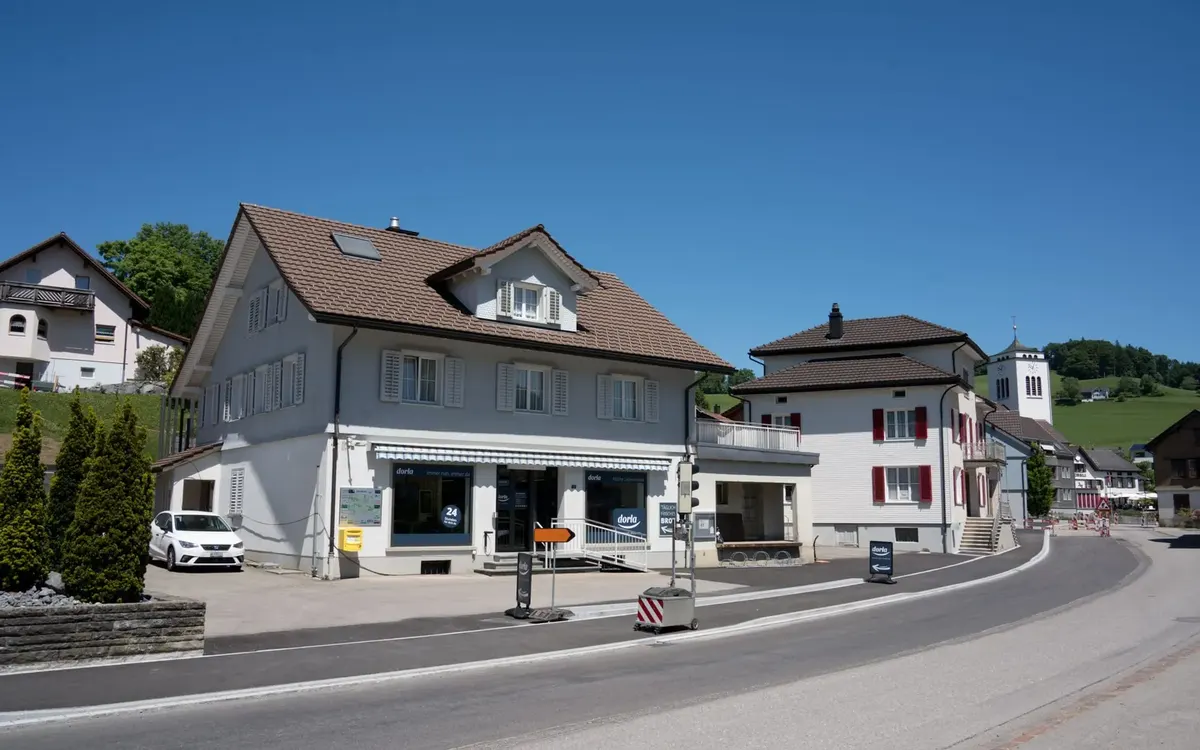
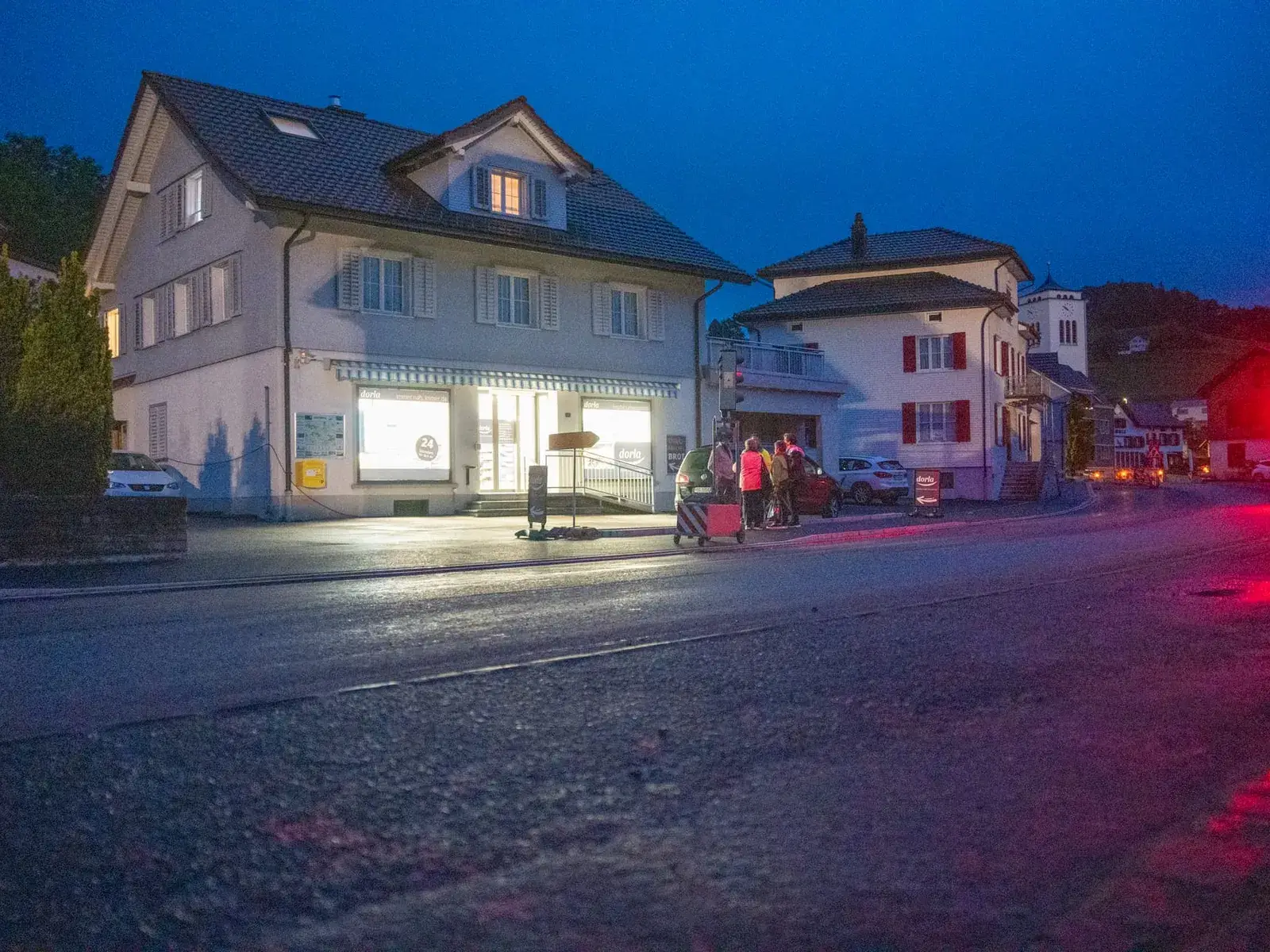
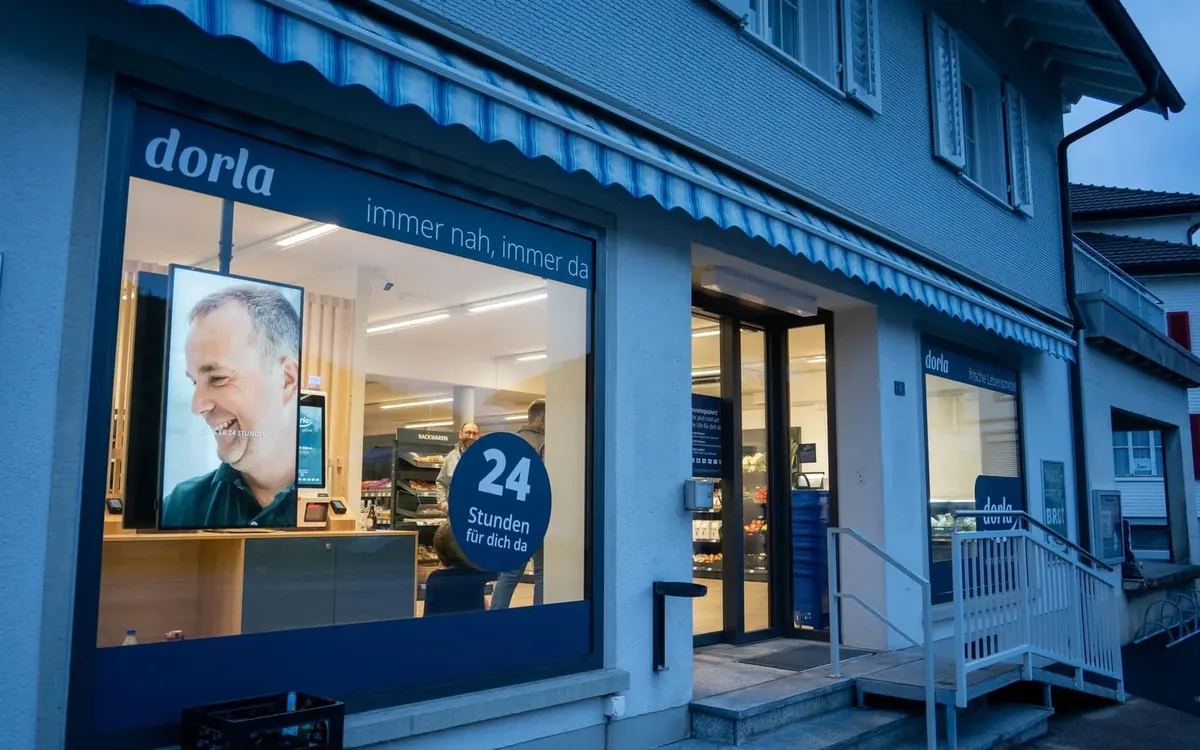
Free entry or entry by code, payment at the self-checkout. The Dorla in Gähwil is open 24 hours; three employees from the village look after the shop.
A shop like the one in Gähwil, in your village too
The Dorla is a village shop that is open around the clock, with no staff at the till. Toggenburgshop AG builds it together with the village, runs it and is looking for more locations.
- Open 24 hours, 7 days a week
- Bread, cheese and meat from producers in the region
- Suits places with about 1,000 residents and premises of 70 to 120 m²
Where the money comes from
Hardly any village shop is financed from a single source. In Gurtnellen, the conversion and launch were budgeted at about CHF 500,000, about CHF 200,000 of it as volunteer work.
Shares and donations
The village takes part directly. In Gurtnellen, 138 shares at CHF 200 had been taken up by the opening.
Municipality
Interest-free loans, grants or guarantees. Gurtnellen received an interest-free loan of CHF 20,000, a CHF 5,000 grant and a guarantee for a possible NRP loan.
Swiss Mountain Aid
Supports village shops in mountain areas, for example with refrigeration, conversion and fittings. The condition: the population backs the shop.
New Regional Policy (NRP)
The federal government and canton fund innovative projects with loans and grants. For a pure local-supply shop this is not a given; the canton decides.
Foundations and sponsors
Many foundations decide only once or twice a year. Asking early pays off.
Crowdfunding
For single items such as the door, signage or lighting. On Raiffeisen’s Lokalhelden platform the Gürkli raised CHF 3,760.
What the canton has a say in
The rules for unstaffed shops are cantonal and partly in flux. This overview (as of October 2026) does not replace checking: ask the municipality and canton early.
Opening hours
In Basel-Stadt unstaffed shops may open around the clock; in Zurich without restriction on weekdays and on Sundays only small shops that are entirely unstaffed. In Lucerne, following a decision by the cantonal parliament, small self-service shops may open from 5 am to 10 pm. In St. Gallen the legal position is disputed.
Alcohol and tobacco
Beer and wine from 16, spirits and tobacco from 18; selling spirits requires a licence. Gurtnellen sells alcohol only during staffed hours because, according to the Urner Zeitung, the canton of Uri does not allow sales via ID scan. Gähwil has a separate cellar with an age check at the door.
Food
Anyone selling food registers the business with the cantonal food control before opening and runs self-checks, for example of the temperatures in fridges and freezers.
Video surveillance
A sign at the entrance must point out the camera. Recordings are usually kept only briefly, and the pavement and neighbouring properties stay out of the picture.
Volunteers: the heart and the risk
Without volunteers many village shops would not exist. At the Gürkli, 943 of 1,758 working hours in the first six months were unpaid, and the business plan assumes two years of volunteer operation. Still, plan paid hours from the start: in the long run, volunteer work alone does not carry a shop.
How other villages did it
Gürkli Gurtnellen: a village rebuilds its shop
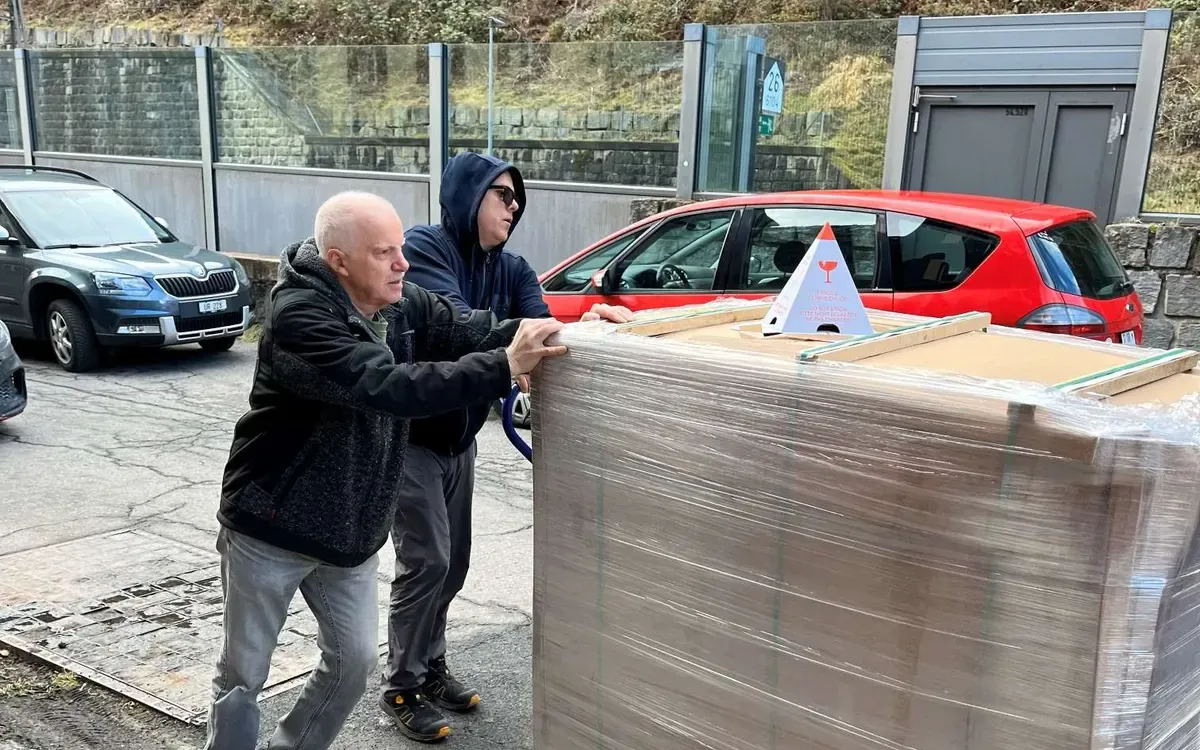
The village shop closed after almost 40 years. The village founded a cooperative, and today the Gürkli is open around the clock.
Dorla Gähwil: a village shop that never closes
Gähwil lost its last shop in 2024. Together with the village association came the Dorla, open around the clock.
Common questions about village shops
How many people does it take to found a cooperative for the village shop?
At least seven. They found the cooperative with a public deed, and it comes into being when entered in the commercial register. There is no minimum capital.
How much turnover does a village shop need?
Swiss Mountain Aid supports shops with an annual turnover of roughly CHF 400,000 to 1 million; below that, a staffed shop counts as financially very critical. Without staff at the till, the wages for most opening hours disappear.
May a village shop open around the clock without staff?
That depends on the canton. Basel-Stadt and Zurich largely allow it; other cantons limit the hours or have no clear rule yet. Ask the municipality and canton before you plan.
Who helps with financing?
Usually the village itself through shares and donations, plus the municipality, in mountain areas Swiss Mountain Aid, foundations and sometimes the federal government and canton through the New Regional Policy.
How do you sell alcohol without staff?
Either only during staffed hours, or behind a door that opens only after an age check with an ID. Check beforehand whether the canton accepts the second option.
What does the technology for an unstaffed shop cost?
At scango.ch the subscription starts at CHF 99 per month, and you pay for the hardware once. The calculator shows what it costs for your shop.
Sources
As of October 2026. The legal information is an overview, not legal advice.
- Schweizer Berghilfe: «Die Bevölkerung muss den Dorfladen mittragen»
- SAB und Berghilfe: Tagung Dorfläden, 27.04.2023
- htr: Berghilfe zu Gesuchen von Dorfläden, 21.06.2022
- Plattform J: Berghilfe unterstützt Dorfläden, 08.11.2024
- SRF: Gurtnellen baut den Dorfladen 2.0, 21.12.2025
- WEKA: Genossenschaft gründen, 15.09.2026
- SECO: NRP-Projektförderung
- Regierungsrat ZH: Beschluss Nr. 646, 18.06.2025
- Kanton Basel-Stadt: Rund um die Uhr offen, 14.12.2023
- SRF: Selbstbedienungsläden in Luzern länger offen, 29.10.2025
- Kanton St. Gallen: Motion 42.25.10 und Antwort der Regierung
- Kanton Aargau: Merkblatt 24, Alkohol und Tabak, 06.05.2026
- BAG: FAQ zum Tabakproduktegesetz
- Kanton Freiburg: Meldepflicht für Lebensmittelbetriebe, 20.07.2023
- EDÖB: Videoüberwachung durch Private
- Lokalhelden: Dorfladen Gurtnellen 2.0
- Urner Zeitung: Der erste 24-Stunden-Laden des Kantons, 10.01.2026 (PDF auf guerkli.ch)
- Genossenschaft Dorfladen Gurtnellen: Newsletter 9
- Dorla Gähwil
- Dorla: Der Dorla bei dir?
What would the shop in your village cost?
Work out with real list prices what the checkout and subscription cost and when self-service pays off.